

Puntarenas, a vibrant coastal hub on Costa Rica’s Central Pacific Coast, offers a tropical experience that is both consistently warm and dramatically seasonal. For any traveler planning a trip, understanding the intricacies of the climate of Puntarenas is paramount, as the local weather patterns dictate everything from wardrobe choices to the very best time to visit. While the location is renowned for its breathtaking natural beauty, the climate of Puntarenas is defined by a remarkable stability in temperature, coupled with a pronounced division between distinct dry and wet seasons. This detailed guide aims to illuminate the complex rhythm of the climate of Puntarenas, providing a thorough understanding of its tropical savannaclimate, its annual rainfall cycles, and the factors that shape life along this beautiful Costa Rican stretch of coast.
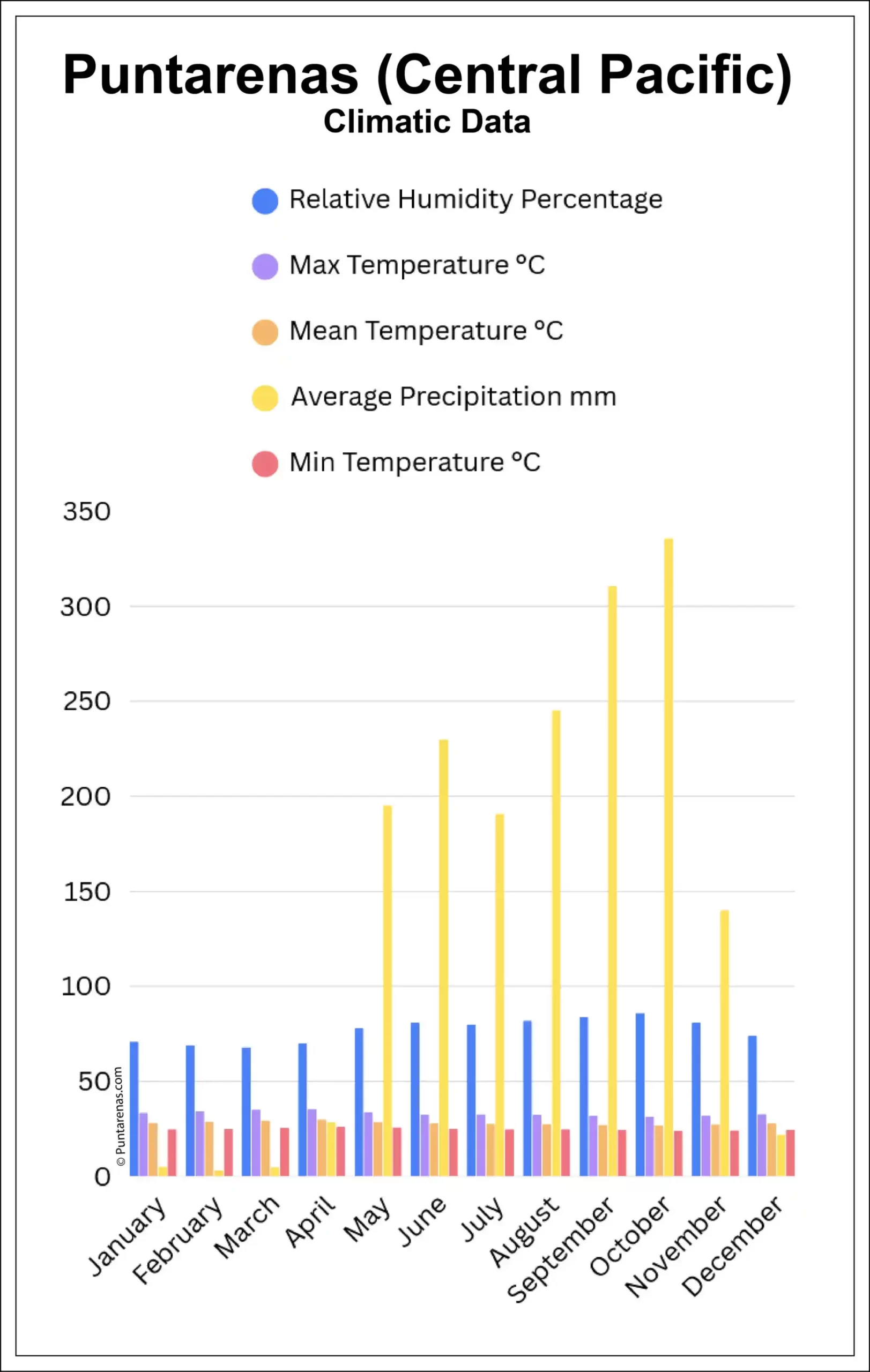
Table of Contents
The Tropical Foundation: A Stable Climate Profile
At its core, Puntarenas enjoys a tropical climate that is remarkably constant throughout the year. Situated at a modest elevation of 5.86 meters above sea level, the area benefits from a stable microclimate that rarely sees extreme variations. This stability is a defining characteristic, providing a year-round warmth that is highly desirable for outdoor enthusiasts and beach lovers alike. The general climate of Puntarenas can be characterized as tropical wet and dry, or savannaclimate, a classification that immediately tells the traveler that while the heat is constant, the rainfall is not.
The average daytime temperatures serve as a key indicator of this consistency. Throughout the year, travelers can expect daytime temperatures to hover around a comfortable 30°C (86°F). While there are slight seasonal fluctuations, the overall thermal experience remains reliably warm. The annual temperature range is narrow, offering a predictable rhythm for planning. The coolest period, typically observed in January, sees daytime temperatures dipping to a comfortable 29°C (84°F). Conversely, the warmest time of the year occurs in March, when temperatures may peak at 32°C (90°F). Even during the night, the temperature remains quite mild, ranging from approximately 24°C to 25°C, ensuring that evenings are generally pleasant and conducive to outdoor exploration. This minimal seasonal temperature shift is one of the most appealing aspects of the climate of Puntarenas, mitigating the concerns often associated with highly variable tropical weather.
The Rhythm of Rainfall: Navigating the Dry and Wet Seasons
If the temperature provides consistency, the precipitation provides the rhythm. The climate of Puntarenas is notably wet, boasting a high annual rainfall total of approximately 2952 mm (116 inches). However, this substantial amount of water is not distributed evenly across the calendar. Instead, the region operates on a clear cycle defined by two distinct periods: the dry season and the wet season.
The dry season, which generally spans from January through March, offers the clearest skies and the most predictable weather patterns. During these months, the low probability of heavy rainfall makes it an ideal time for activities that require reliable outdoor conditions. The driest month, in terms of precipitation, is February, which records only 20 mm (0.8 inches) of rainfall, though this small amount is spread across several days. This period is often highlighted by the combination of lower rainfall and higher sunshine hours, making it a prime time for first-time visitors.
The Golden Hours: Sunshine and Atmospheric Clarity
Beyond mere rainfall totals, the quality of light and the hours of sunshine significantly shape the daily life and tourist experience. The data reveals a clear winner in the race for optimal sunshine: March. This month is consistently cited as the sunniest, averaging an impressive 9.4 hours of sunshine per day. This abundance of daylight hours, coupled with the dry climate, makes March a spectacular time to explore the region, allowing for extended outdoor activities.
Conversely, the months of late spring and early summer, particularly June, show a noticeable dip in sunshine hours. June, for instance, averages only 5.2 hours of sunlight daily. This difference highlights how crucial the seasonal shift is; a traveler arriving in June must prepare for shorter periods of uninterrupted sunshine compared to someone visiting in March.
The wind patterns also contribute to the overall feel of the climate of Puntarenas. The mean wind speed remains relatively consistent throughout the year, generally varying between 1 m/s and 2 m/s. However, there are subtle shifts. The wind speed is noted as being lowest during several months, which contributes to the generally calm and stable atmosphere experienced by visitors. While the wind speed varies, the overall tropical marine influence ensures a constant refreshing breeze that mitigates the intense heat, keeping the coastal air vibrant and alive.
Optimizing the Visit: A Guide to Timing Your Trip
Drawing together the data on temperature, rainfall, and sunshine, a clear picture emerges regarding the optimal timing for a trip. The climate of Puntarenas offers appealing conditions in several periods, but the ideal visit depends heavily on the traveler’s priorities.
For those who prioritize the driest possible weather and maximum sunshine, the early part of the year—specifically January, February, March, and even parts of December and April—are the most advantageous times. These months offer the best combination of minimal precipitation and high sunshine hours, making them ideal for extensive travel, hiking, and beach days.
If a visitor is less concerned with perfect dryness and is instead looking for a slightly cooler, yet still vibrant, tropical experience, the transition months can be appealing. However, those who are willing to embrace the lush, vibrant greenery that the heavy rainfall provides must plan for the wet season (May to November). During this time, while the rain can be intense, the resulting tropical foliage and dramatic natural scenery are unparalleled.
The understanding of these cyclical patterns is crucial for the modern traveler. Recognizing that the climate of Puntarenas is inherently tropical means accepting that while the temperatures are stable and warm year-round, the sky and the ground beneath your feet will tell a story of the month. The transition from the relatively arid, sunny conditions of the dry months to the deep, verdant saturation of the wet months is the defining feature of the region’s natural beauty.
Conclusion: Embracing the Tropical Cycle
Ultimately, the climate of Puntarenas is a study in tropical contrasts: stable heat paired with dramatic seasonal shifts in moisture. It is a destination that demands that the visitor become attuned to the rhythms of nature. The consistently warm average daytime temperatures, the distinct demarcation between the dry, sunny months and the lush, rain-soaked wet period, and the predictable cycle of sunshine hours all contribute to a complex yet deeply rewarding climatic profile.
By understanding the details—from the dry, reliable predictability of February to the profound, emerald vibrancy brought by October’s heavy rains—travelers can move beyond simply knowing that Puntarenas is hot, to understanding when and how to experience its unique natural splendor. Whether planning for sun-drenched explorations in the dry season or embracing the dramatic rainforest life during the wet season, a thorough appreciation of the climate of Puntarenas ensures that the journey itself is as enriching as the destination. This knowledge transforms the planning process into a tailored adventure, ensuring that every visit to this magnificent corner of Costa Rica is perfectly timed to match the visitor’s ideal tropical experience.