The Central Pacific coast of Costa Rica houses one of the most ecologically complex and logistically vital corridors in Middle America: the Tárcoles region. Far more than a mere transit point for travelers heading toward the southern beaches, this enclave serves as a unique biological bridge where the tropical dry forests of the northwest converge with the humid rainforests of the south. This intersection creates a high-density “transition zone” that supports a staggering array of biodiversity, including the world-renowned American crocodile and the endangered scarlet macaw.
As of 2026, Tárcoles is undergoing a profound transformation. While a multi-million dollar infrastructure project modernizes the region’s primary artery, the local tourism model is shifting from quick roadside stops toward immersive, eco-conscious experiences that highlight the area’s resilience and natural splendor.
The Ecological Heart: Carara National Park
At the center of this biological corridor lies Carara National Park, a 20-square-mile sanctuary that serves as the ecological anchor for the region. Its name, derived from the indigenous Huetar language meaning “River of Lizards,” reflects the ancient connection between the land and its reptilian inhabitants. Carara is globally recognized as a premier destination for ornithologists, boasting over 430 confirmed bird species.
The park is a pioneer in inclusive design, featuring the first Universal Access Trail in the Costa Rican national park system. This 1.2-kilometer paved path allows visitors of all mobility levels to experience the primary forest, complete with Braille labeling and tactile animal statues for the visually impaired. For those seeking deeper immersion, the Laguna Meándrica Trail offers a 2-kilometer journey through an oxbow lake environment, providing the best opportunities to spot herons, kingfishers, and crocodiles in still waters.
The American Crocodile and the Safari Shift
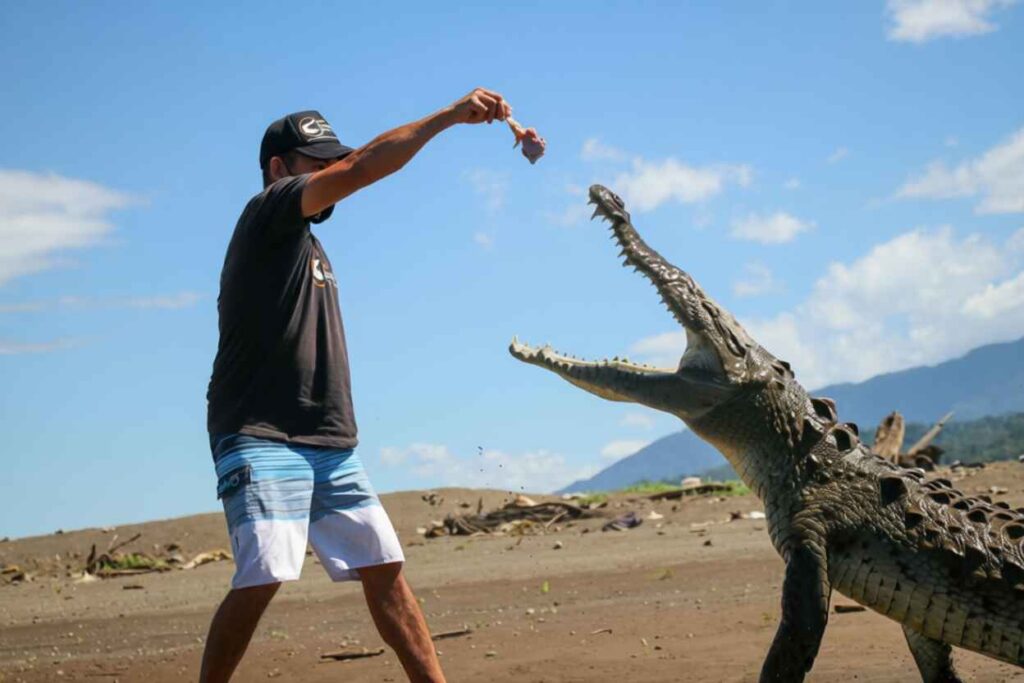
The Tárcoles River is famous for hosting one of the highest concentrations of American crocodiles (Crocodylus acutus) in the world. Historically, the “Crocodile Bridge” allowed tourists to peer down at specimens exceeding five meters in length. However, the landscape of 2026 has fundamentally changed this experience.
Due to a massive $6.73 million rehabilitation project on the Tárcoles Bridge, pedestrian access for wildlife viewing is strictly prohibited through June 2026 for safety reasons. This regulatory shift has successfully redirected the tourism flow toward boat-based safaris departing from Tárcoles village. These safaris offer a superior perspective, allowing for eye-level encounters with the river’s apex predators and other wildlife like the basilisk “Jesus Christ” lizard and various mangrove-dwelling monkeys. Reputable operators have abandoned the illegal practice of feeding crocodiles, focusing instead on educational, non-invasive observation that respects the animals’ natural behaviors.
Avian Spectacles: The Dance of the Scarlet Macaws
Tárcoles and Carara protect the largest nesting population of scarlet macaws on the Pacific coast. These vibrant birds follow a strict diurnal cycle: just after dawn, they fly from their coastal roosting sites in the Guacalillo mangroves toward the feeding grounds in the Carara forest, returning at dusk.
This migration remains one of the most reliable wildlife spectacles in the country, with flocks of 20 to 40 birds often visible from the coastal highway and Tárcoles Beach. The region’s unique transition ecology is the key to their survival, as the birds utilize the primary forest for nesting and the saline-rich mangroves for shelter.
Beyond the Main Road: Playa Azul and Hidden Cascades
While many travelers focus on the river, the village of Tárcoles and its surroundings offer quiet retreats from the high-density development of nearby Jacó. Playa Tárcoles remains a working fishing village where scarlet macaws frequently feed in the wild almond trees lining the shore.
Just north of the village lies Playa Azul, a remote stretch of dark, cobalt-blue sand marketed as a tranquil haven. This area has seen the emergence of upscale retreats that prioritize solitude, allowing guests to watch spectacular sunsets and listen to howler monkeys without the noise of discos or vendors.
For the physically fit, the Catarata Manantial de Agua Viva is a must-see hidden gem. At 200 meters, it is one of the tallest waterfalls in Costa Rica. Reaching the falls requires a strenuous 3-kilometer hike through steep terrain, rewarding the adventurous with freshwater pools and unparalleled views of the coastal forest.
Navigating the 2026 Travel Reality
Infrastructure evolution is the defining logistical theme for Tárcoles in 2026. The bridge rehabilitation—essential to prevent structural failure and ensure earthquake resistance—has resulted in 24/7 single-lane alternating traffic.
The impact on travel times is significant:
- San José to Jacó: Can now take up to 4.5 hours (up from 2 hours).
- San José to Manuel Antonio: Has increased from 3.5 hours to roughly 6 hours.
To bypass these delays, a surge in demand for private air charters has transformed how luxury travelers reach the coast, with flights from San José reaching the region in under 30 minutes. For those driving, experts recommend crossing the bridge before 8:00 AM or after 6:00 PM to minimize wait times.
Culinary Identity and Local Flavor
No visit to the Tárcoles corridor is complete without exploring the local “Soda” culture. These family-owned, open-air restaurants are the heart of Costa Rican hospitality. The Casado—a hearty plate of rice, beans, salad, plantains, and a protein like fried red snapper—remains the quintessential local meal.
Regional specialties like “Pescado Entero” (whole fried fish) and the “Churchill” (a decadent shaved ice dessert from nearby Puntarenas) offer a true taste of the Central Pacific. Notable stops include Steven Lisa’s on Route 34 for a quick seafood soup or Soda El Guácimo for a traditional breakfast of gallo pinto.
A Synthesis of Resilience
Tárcoles in 2026 represents a delicate balance between progress and preservation. Despite the logistical challenges of construction and the environmental pressures on the river watershed, the region remains a vital ecological node. The success of the Universal Access Trail in Carara and the shift toward boat-based eco-tourism suggest a more sophisticated future for the area—one that values the integrity of the ecosystem as much as the convenience of the road. For the informed traveler, Tárcoles is no longer just a stop along the highway; it is a destination where the raw power of nature and the resilience of a community meet at the edge of the Pacific.
Tourist Attractions and Restaurants in the Tárcoles River Region
The Tárcoles River Bridge (Phase 4) is an infrastructure site located along Route 34 (Costanera Sur) in Tárcoles. It is an iconic spot for observing American crocodiles, although it is currently undergoing structural rehabilitation due to seismic risk. From February to June 2026, traffic is reduced to a single alternating lane operating 24 hours a day. Access is free, but pedestrian access is restricted during this period.
Carara National Park, located 2 km south of the Tárcoles River Bridge, is known for its unique transitional forest and its notable population of scarlet macaws. It features wheelchair-accessible trails, making it inclusive for a wide range of visitors. Its schedule varies by season: from May to November it is open from 8:00 a.m. to 4:00 p.m., and from December to April from 7:00 a.m. to 4:00 p.m. Admission costs approximately $10 for foreign adults and $5 for children.
The Crocodile Man Tour is a boat tour departing from the town of Tárcoles. It offers close-up views of crocodiles, birds, and mangroves along the river, making it an excellent alternative to visiting the bridge during construction. It operates daily with multiple departures and costs start at $40 per person.
The Manantial de Agua Viva Waterfall, located near Tárcoles, is one of the tallest waterfalls in Costa Rica at around 200 meters high. Reaching it requires a strenuous 3 km hike, and hiring a guide is recommended. It is open during daytime hours, with entry or consumption fees typically ranging from $15 to $25.
Soda Jacó Rústico, located in downtown Jacó, is a traditional Costa Rican eatery (soda) offering dishes such as casados and gallo pinto. It is known for its family-friendly atmosphere and affordable prices. It serves breakfast, lunch, and dinner, with meals typically ranging from $5 to $12.
Playa Azul, located north of the town of Tárcoles, is a quiet and less crowded beach with dark, almost blue-colored sand. It is ideal for visitors seeking a peaceful environment and is also a good spot for observing scarlet macaws. It is open 24/7 and free of charge.
The Guacalillo Estuary, at the mouth of the Tárcoles River, is a natural mangrove reserve that contains four different species and serves as a critical nesting site for scarlet macaws. It is best visited early in the morning or at sunset. Boat tours typically cost between $30 and $60.
The Universal Trail (Carara National Park), located at the park ranger station, is the first fully accessible trail in Costa Rica. It is paved and includes tactile features and Braille signage. Access is subject to park hours and is included in the park entrance fee.
Sépalo Restaurant, located in the Tárcoles/Jacó area, offers an upscale dining experience featuring fusion cuisine, sushi, and meats, using fresh local ingredients and highlighting creative cocktails. It operates in the afternoon and evening, with prices ranging from $25 to $50 per person.
Finally, the Meandering Lagoon Trail, in the northern sector of Carara National Park, is a 2 km linear trail alongside a lagoon. It is ideal for birdwatchers, especially those interested in aquatic species. It is included in the park entrance fee but is closed during September and October due to flooding.