

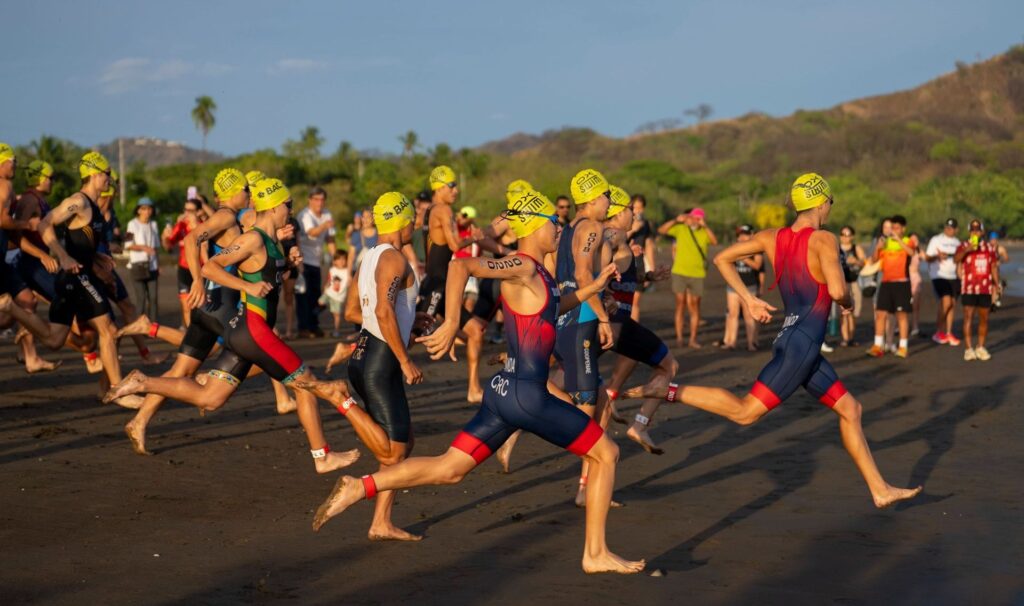
The city of Puntarenas, historically known as the main gateway to Costa Rica’s Pacific coast, is preparing to host one of the most significant events on the national sports calendar. The BAC Triathlon Series Clásico Paseo de los Turistas 2026, scheduled for Sunday, July 26, 2026, is not just an endurance competition; it represents a technical and organizational milestone that consolidates Costa Rica as a regional epicenter for world-class triathlon. Produced by Unlimited Sports, this event blends the cultural identity of the “Port” with the highest standards of World Triathlon, offering what organizers describe as “the fastest triathlon in Costa Rica.”
Table of Contents
The strategic framework of the 2026 season
The Paseo de los Turistas Triathlon Cup serves as a strategic component within a structure of technical and geographical progression designed for the 2026 season. Chronologically positioned as the second key date of the series, it sits between the El Coco Triathlon, to be held in May, and the season finale in Quepos, scheduled for November. This sequencing is essential for triathletes, as it allows performance peaks to be planned in alignment with qualification periods for international events and the national ranking of the United Triathlon Federation (FEUTRI).
The importance of this event goes beyond sports, driven by a partnership with the financial sector that has elevated production standards to levels competitive with European and North American circuits. With a standardized registration fee that includes liability insurance, advanced medical assistance, and high-precision electronic timing, the competition guarantees a professional experience for both elite athletes and amateurs.
Technical analysis of the course: A fast, linear circuit
Puntarenas’ topography offers unique advantages for triathlon practice. The Paseo de los Turistas is a narrow strip of land that enables the design of a linear circuit, ideal for achieving very high average speeds. The course is not only a physical challenge but also a journey through the city’s history, incorporating landmarks such as the Monument to the Dockworker and the Old Customs House, enhancing the event’s tourism value.
Competition segment dynamics
The race is divided into three critical phases that demand specific technical adaptation depending on the Sprint (750m swim, 20km cycling, 5km run) and Standard (1500m swim, 40km cycling, 10km run) distances.
Swimming in the Gulf of Nicoya: The swim segment takes place in front of the boardwalk. Safety protocols for 2026 require continuous monitoring of water quality to ensure acceptable bacterial levels, protecting participants’ health. The early start, with the first waves at 6:15 a.m. for Sprint and Elite distances, aims to take advantage of stable sea conditions and avoid the stronger currents of the morning tide change.
Cycling on flat terrain: The cycling circuit is predominantly flat, favoring time-trial specialists. However, athletes must manage exposure to crosswinds at the tip of the peninsula, which can create instability in bikes with deep-section wheels. In the Standard distance, competitors must complete 8 laps of a circuit that demands technical precision in 180-degree turns.
Running under tropical heat: The run takes place along the boardwalk, exposing athletes to a sea breeze that only partially mitigates the radiant heat, which intensifies after 7:00 a.m. In this section, crowd support is usually massive, turning the final effort into a community celebration.
Regulatory evolution: World Triathlon 2026
The 2026 edition is marked by the implementation of definitive updates to World Triathlon (WT) regulations, fully adopted by FEUTRI to ensure fairness in competition. One of the most significant changes is the standardization of the drafting zone to 12 meters for all events, a critical measure on flat circuits like Puntarenas to maintain competitive integrity.
Penalties have also been adjusted to be proportional to distance: 30 seconds in the penalty box for Sprint distance and 1 minute for Standard. Additionally, responding to the extreme climatic conditions of tropical locations, the new rules allow athletes to wear uniforms with sleeves up to the elbow in all distances, facilitating protection against solar radiation.
Logistical and operational management: The athlete’s manual
Organizing an event that mobilizes hundreds of people before dawn requires meticulous coordination. Unlimited Sports has centralized pre-event activities at Hotel Puerto Azul, which serves as the venue for packet pickup on Saturday, July 25, and the awards ceremony on Sunday.
The transition bag system
Following international standards used in events such as World Cups, a color-coded bag system is implemented to manage athletes’ equipment, optimizing space in Parque Lobo (transition area).
- Blue Bag (T1): Contains cycling gear; the athlete places their swim gear here after the first segment.
- Red Bag (T2): Contains running gear.
- Black Bag: Used for general storage.
This level of discipline is essential for a competition with more than 600 participants to operate with “Swiss watch” precision. The organization also implements a “self-marking” system, where athletes are responsible for placing their race numbers according to official instructions, streamlining entry into the transition area.
University Ranking and youth projection
A historic development for the 2026 season is the strengthening of the University Ranking, resulting from collaboration between FEUTRI and the University Sports Federation (FEDEU). Historically, Costa Rican triathlon faced a decline in youth participation upon entering higher education. The Puntarenas event is one of the scoring competitions for this ranking, ensuring strong participation from athletes aged 18 to 25 and increasing competitiveness in these categories.
Socioeconomic impact and sustainability
The Paseo de los Turistas Triathlon Cup is an economic driver for the province of Puntarenas. With an estimated total attendance of more than 2,000 people—including athletes, families, and support teams—commercial activity directly benefits local restaurants, hotels, and transport providers. The organization promotes “Sustainable Impact” by hiring local staff and implementing hydration stations that minimize plastic waste, allowing cyclists to refill their own bottles without physical contact.
Final considerations for competitors
For those aiming for the podium, preparation must go beyond physical condition. Understanding the appeals process is essential: official results are published at 11:30 a.m., and any protest must be submitted at the Timing Tent before 11:00 a.m. to be considered prior to the awards ceremony.
The Triathlon Series at Paseo de los Turistas is not just a race; it is the culmination of a joint effort to position Puntarenas as a sports capital. The combination of a fast course, logistics refined over 17 years, and the passion of the local crowd ensures that July 26, 2026, will be a date etched in the memory of Costa Rican sport. For the athlete, it is an opportunity to compete on an elite stage; for Puntarenas, it is a window to the world that celebrates its history and projects its future as a premier tourist destination.